26/08/26
The Pattern of Life: Enid Marx and Modern British Design
Compton Verney, Warwickshire
18 July 2026 – 3 January 2027
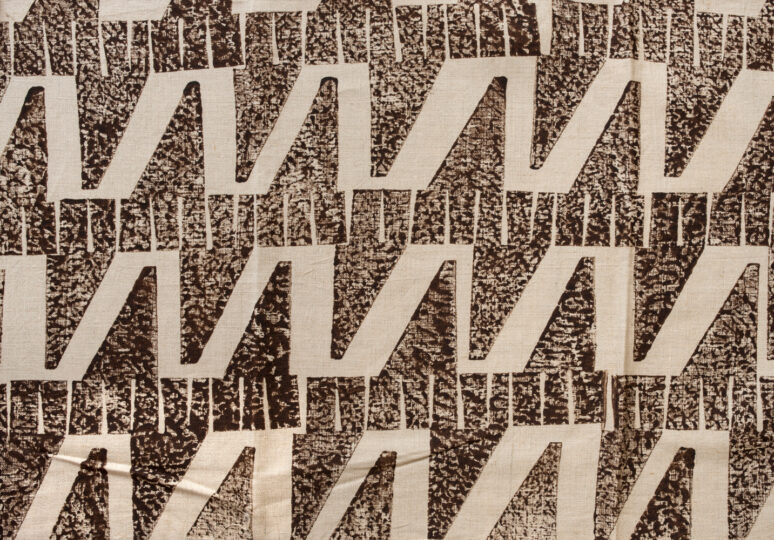
Born in London to an entrepreneurial, upper-middle-class, German-Jewish family, Enid Crystal Dorothy Marx (1902-98) grew up with the ambition, inspired by her father who had himself produced numerous patents, to make design available to the wider public by harnessing the machine age. Marx studied painting at the Central School of Arts and Crafts (1921-22) and the Royal College of Art (1922-25), where her cohort – comprising contemporaries such as Eric Ravilious, Bernard Leach, Roger Fry and Barnett Freedman – was heralded as “an outbreak of talent” by their tutor Paul Nash. Her diploma at the RCA was nevertheless failed by the examiners for a painting they judged to be “too radical” and “too abstract”. Marx was further refused entry to wood-engraving classes, ostensibly owing to her “poor drawing”, but more likely to her gender. It was from her friend Ravilious that she learned the rudiments, and this practice went on to be her primary medium. From 1925-27, she trained in wood-block printing and natural dyeing techniques with the textile designers Phyllis Barron and Dorothy Larcher, becoming quite the convert and noting: “Every material has its own particular limitations and its own individual qualities. Wood, whether end grain or plank, when cut with engraver or chisel gives a crisp line which cannot be obtained by pencil, pen or brush.” She, like Nash, believed wood engraving allowed artists to express something personal and even autobiographical. Whereas William Morris expounded the belief that arts and crafts should be produced by hand in workshops, however, Marx looked to modernity and the possibilities of mass production.
Read the full review here