17/08/26
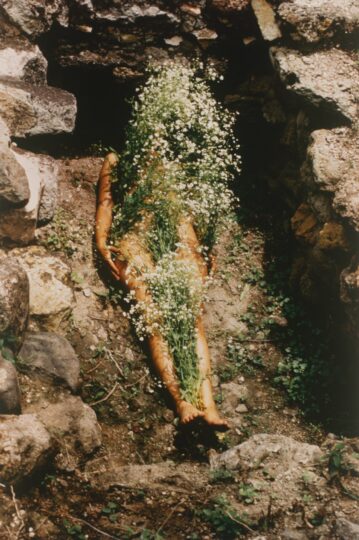
End frame: Imagen de Yagul (1973), by Ana Mendieta
When the Cuban-born artist Ana Mendieta (1948-85) made her Silueta [silhouette] works, she performed them alone in the landscape. ‘When I find the site,’ she said, ‘I have things to do there – work rituals. For example, I wear comfortable clothing, have special tools, and insist on working alone … I cannot be distracted.’ That said, she was usually accompanied by her tutor and lover, Hans Breder, who would film and photograph the event. Given the ephemeral nature of the Silueta themselves, the more than one thousand 35mm slides, Super-8 films, and colour and black-and-white photographs are all that remain, and, indeed, all that even contemporary audiences would have seen. In her personal writings, Mendieta explained: ‘In galleries and museums the earth/body sculptures [as she termed her Silueta] come to the viewers by way of photos, because the work necessarily always stays in situ. Because of this and due to the impermanence of the sculptures the photographs become a very vital part of my work.’
Read the full article in On Landscape here